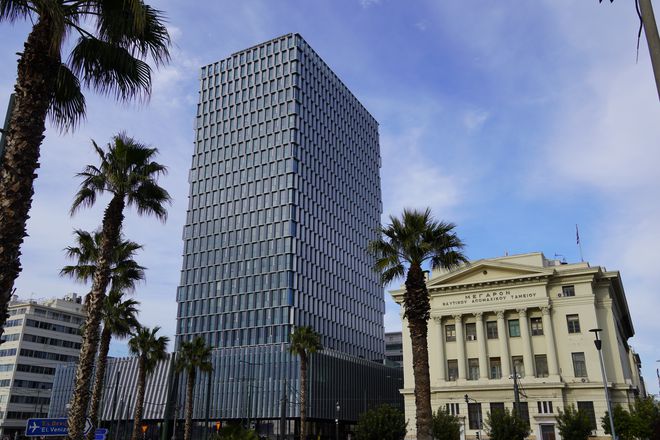
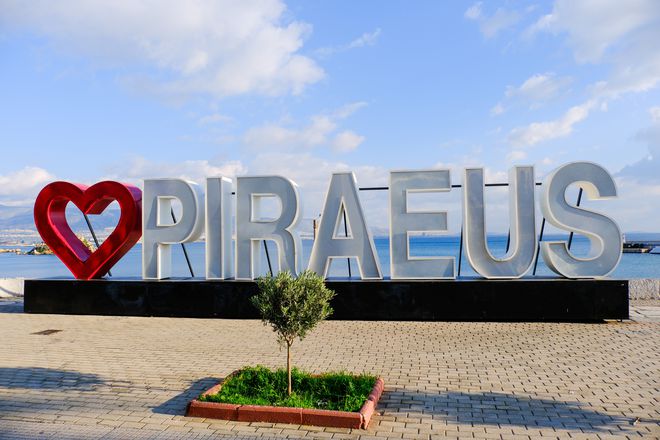
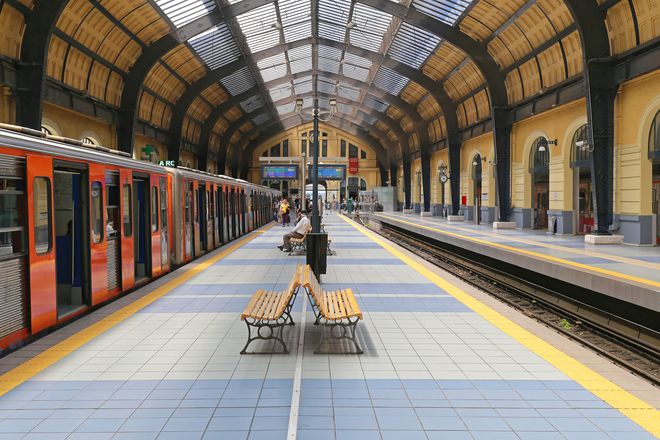
Our tour begins above the main port, up on the bridge where ferries, cargo ships, cruise liners, metro lines, and trucks all collide at once. It looks chaotic. But once you know the history, it makes a strange kind of sense.
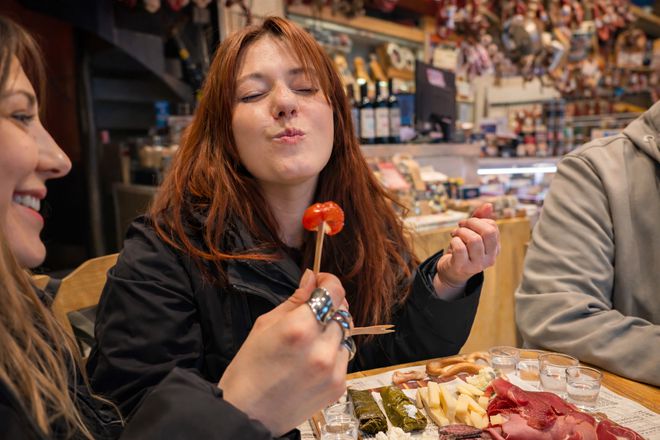
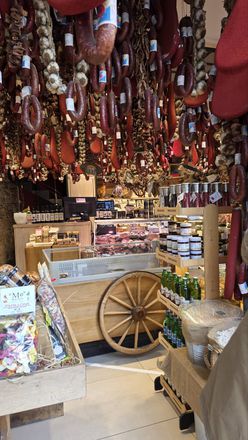
From there, we move into the city itself. The first food stop comes early, and on purpose: the delis we visit aren’t just places to eat — they’re archives in edible form. Almost everything on offer traces back to the wave of Greek refugees who arrived from Asia Minor after 1922: the pastourmas, the sujuk, the cheese traditions, the flavors that crossed the Aegean with people who had nothing else to carry.
The walk then moves through the old market area. There’s a lot happening in this stretch — a church rebuilt after wartime bombing, a sailors’ welfare fund that was one of the first social insurance institutions in Europe, a clock tower that no longer exists but whose address still organizes the street. Cities are made of layers, and this part of Piraeus wears most of them at once.
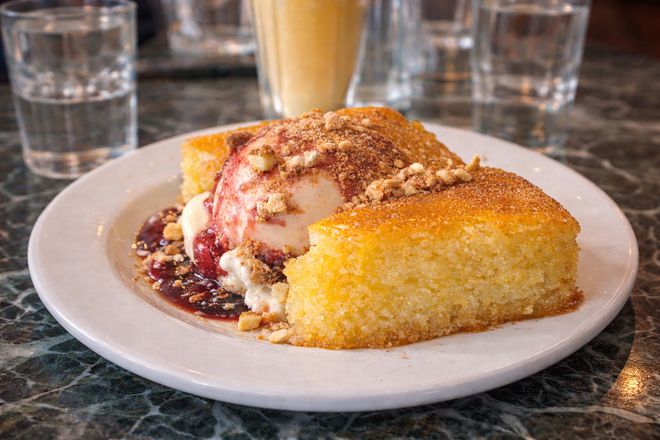
The sweeter stop comes at a third-generation dairy shop where you’ll taste kaimaki ice cream and samali. Both things sound simple. Neither of them is.
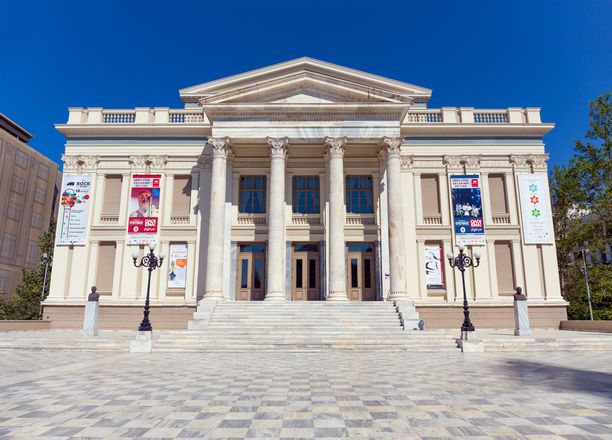
Next, the Municipal Theater — neoclassical, grand, and slightly unexpected in a port city, which is exactly the point. Right beneath it, the metro station holds the ghost of ancient Piraeus: cisterns, wells, and a 5th-century street grid that kept a siege-ready city alive.
The souvlaki stop is, in tone, completely different from everything else — and that’s exactly right. The story behind the modern souvlaki format, which also has roots in the refugee communities of the 1920s, is better told on a full stomach anyway.
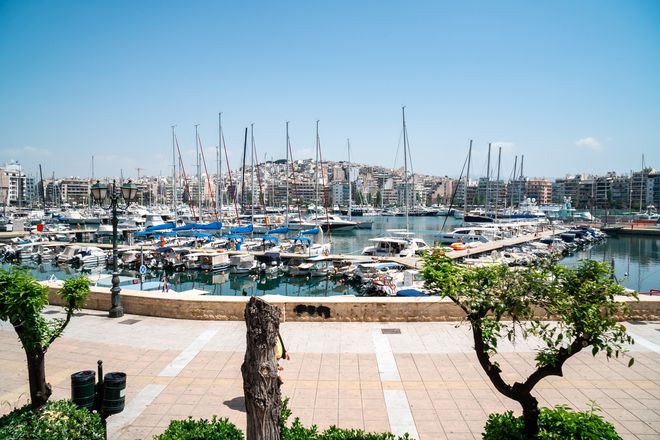
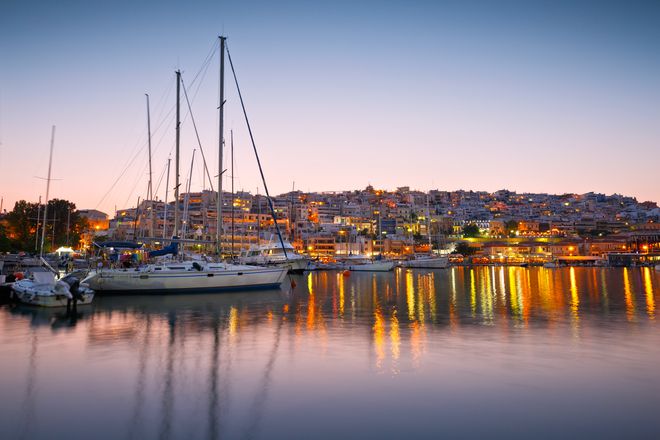
The final stretch moves toward Pasalimani and into the neighborhood above the bay, where shipowners built villas with a view. The ancient harbor of Zea is the last stop before the end: a marina now, but once lined with two hundred covered shipsheds for Athenian triremes. This is also where the story of Olympiacos comes in — why a football club carries a lion on its badge, and why that means something different here than anywhere else in Greece.
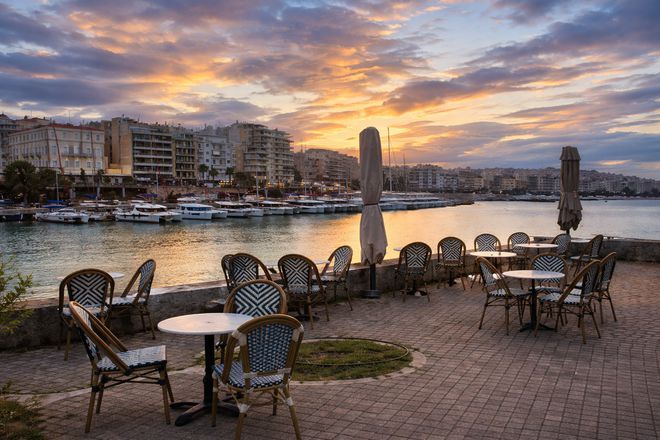
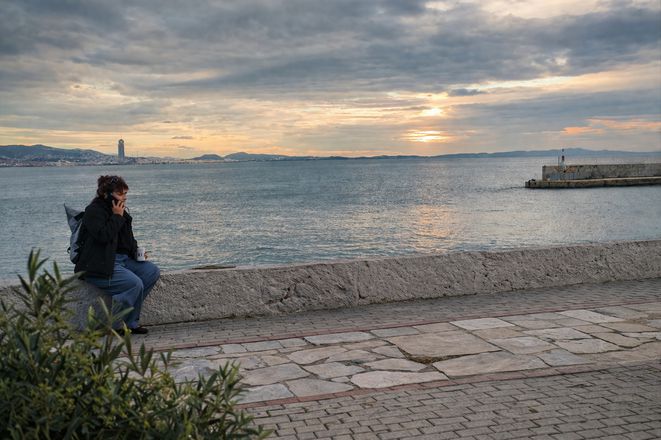
The tour ends at a beautiful point above the sea at Kastella, where you can enjoy a drink at sunset among locals, and understand why this city still knows exactly what it is.